
 Apple Developer Academy
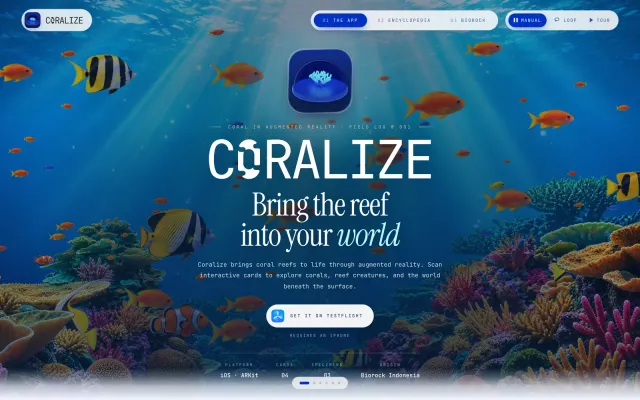
Coralize is an AR field guide to corals. Point your iPhone at a printed card and a 3D coral stands up on it, following the card as you move or tilt it.
We made it at Apple Developer Academy in a team of five. The challenge was to pick a community in Bali and take inspiration from it. It didn’t have to be an app for them. We picked Biorock Indonesia in Pemuteran.
How it started
Biorock is a way of restoring coral reefs. Steel frames sit on the seabed with a safe, low voltage current running through them, so limestone slowly builds up on the metal. Coral fragments tied to the frames grow faster there. We visited their site, went snorkeling, and talked with the people who look after the reef.
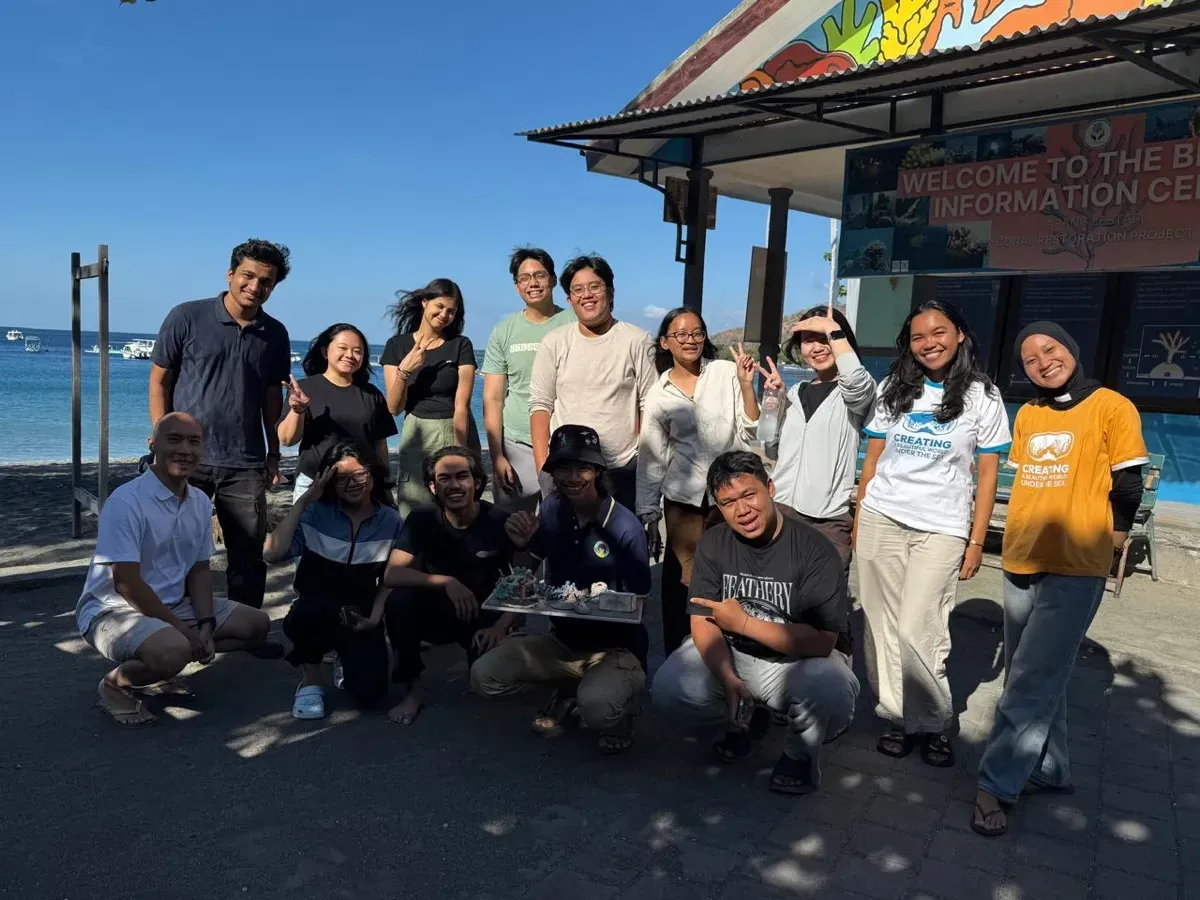
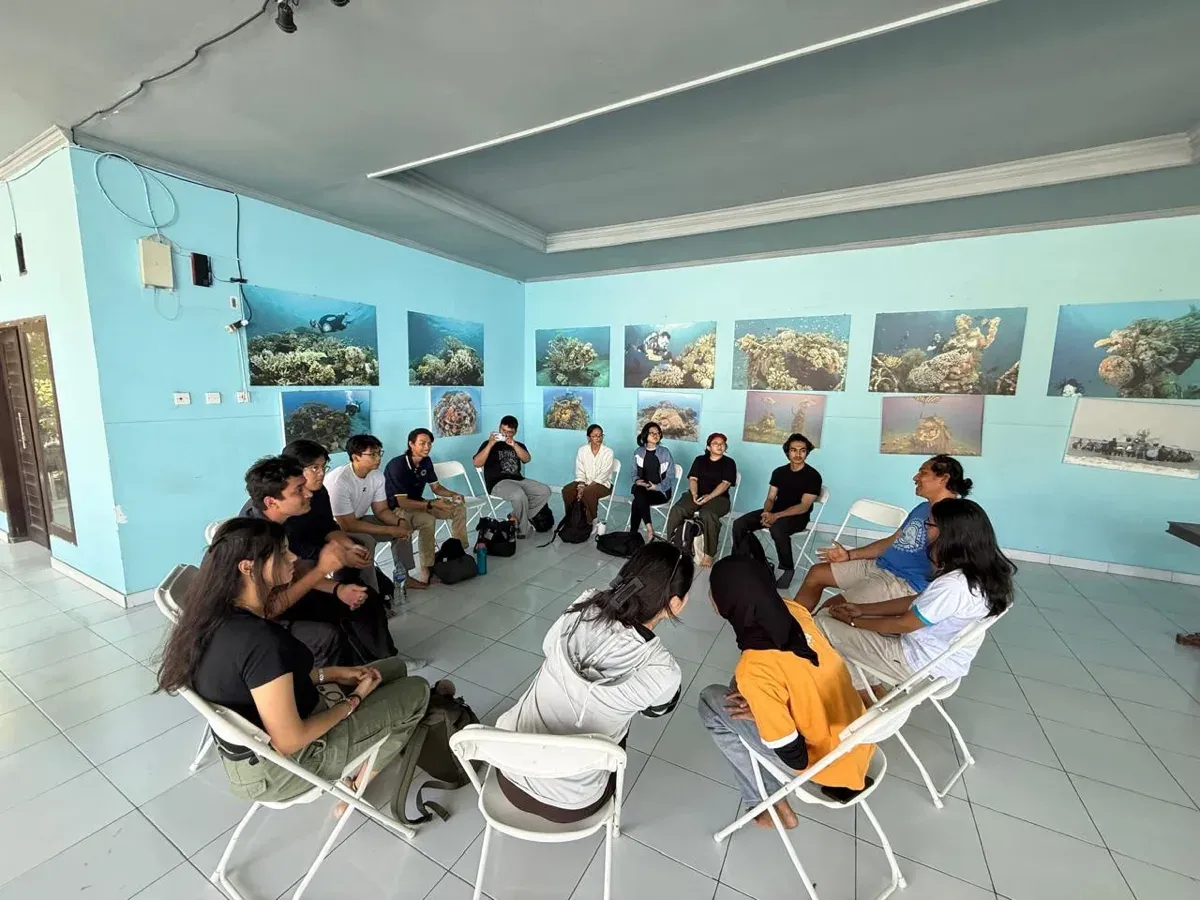 Our visit to Biorock in Pemuteran
Our first idea was to help beginner divers with buoyancy, which is how you stay level in the water without sinking or floating up. Divers told us it’s the hardest skill to learn, and one bad kick can break a coral. But none of us had dived before, and doing that research in the water would have been risky.
So we looked at the visitors instead. A lot of people come to Biorock, and some of them can’t snorkel or are scared of the water. They never get to see the corals or how the restoration works. We wanted to help them learn about it without going in.
What the app does
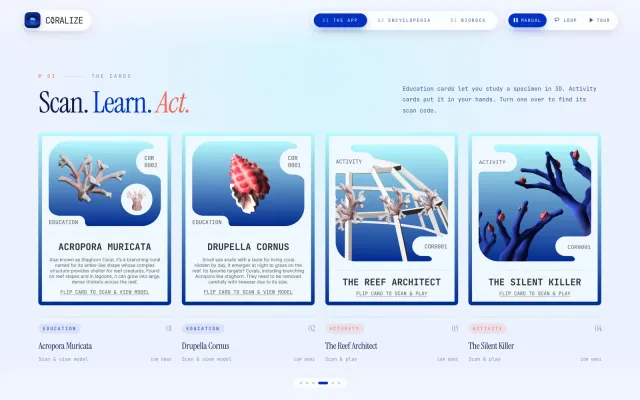
- There are two kinds of printed cards. Education cards show a specimen to study, and activity cards give you a game to play. Point the camera at one and its model appears on top.
- On an education card you walk around the model and tap the dots on it to read about each part.
- In The Silent Killer, you pinch drupella snails off a coral before 30 seconds run out. These snails eat coral, and the Biorock team picks them off by hand.
- In The Reef Architect, you pick up coral fragments and plant them on a Biorock frame in 45 seconds.
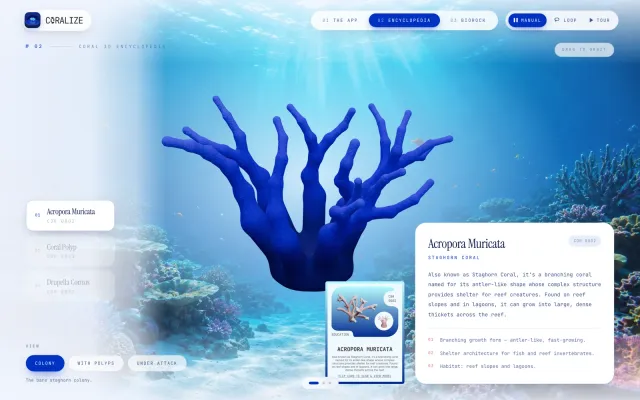
The website is the app’s landing page, with a 3D coral encyclopedia inside. You can spin a staghorn coral, a coral polyp and a drupella snail, and see the coral bare, with its polyps out, or covered in snails.
What I did
- Did the research at Biorock with the team. We interviewed the people who look after the reef, and I joined their coral conservation experience to see the restoration work up close.
- Made the 3D models in Blender and took each one through every step. I blocked out the shape first, built the mesh, sculpted the detail, then did the texturing and shading.
- Worked with the team on the AR side, mostly The Reef Architect, where you plant coral fragments onto a Biorock frame.
- Built the website, from the landing page to the 3D encyclopedia. You can drag each model to turn it around, and the coral changes as you switch between its three views.
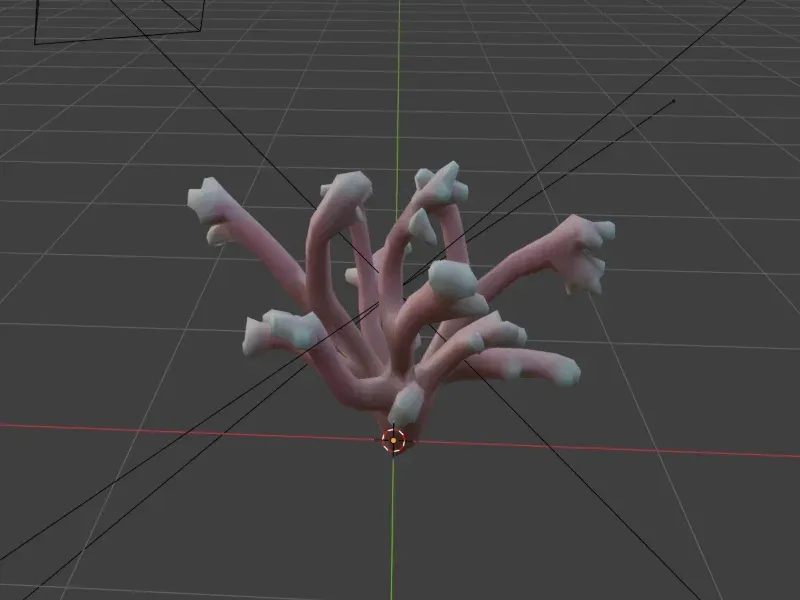 One of my coral models in Blender
We showed Coralize at the Academy exhibition. We decorated our tables with paper corals and laid the printed cards out for people to pick up. Visitors could point an iPhone at a card, watch the coral rise from it, and try the games. The website was up on the screens around our tables, so people could also turn the models around in 3D.
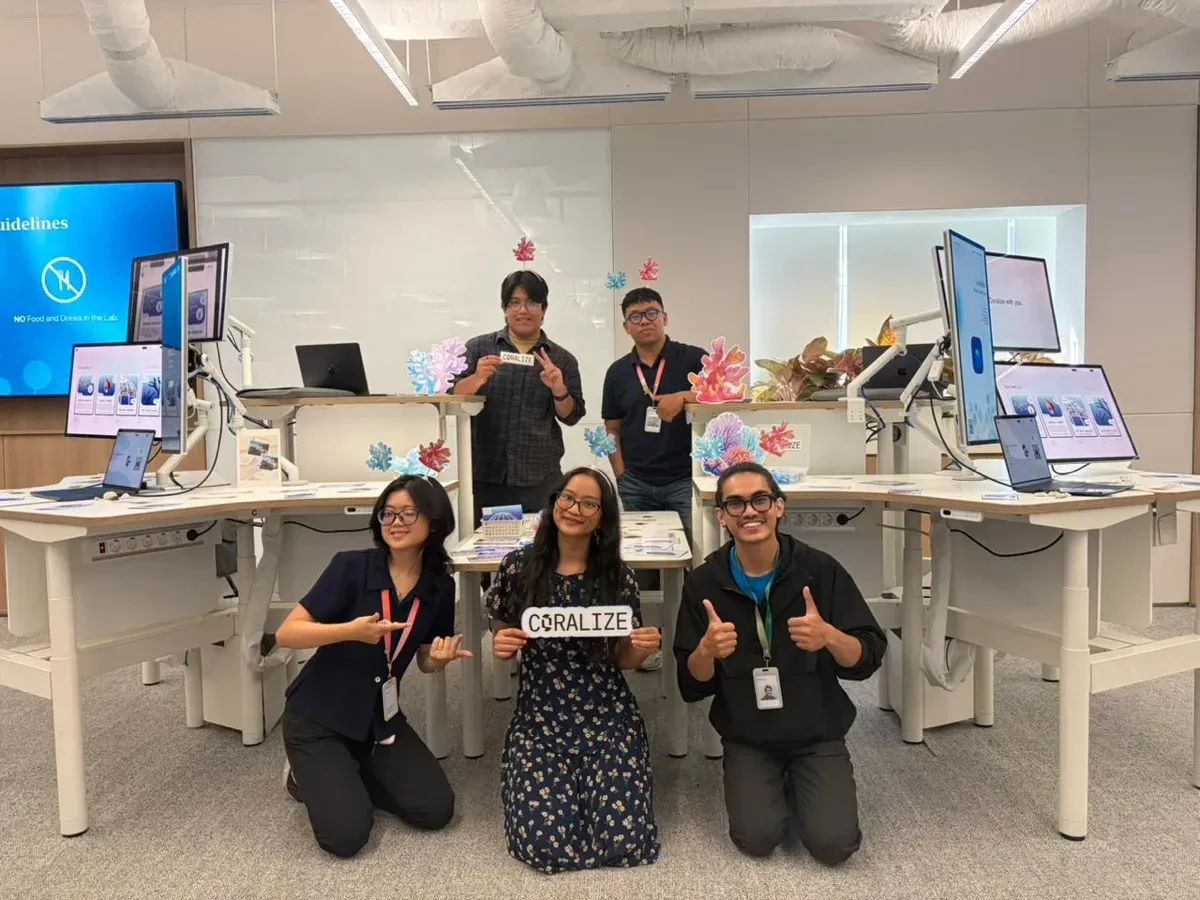 Our booth at the Academy exhibition