
When I first moved to Bali, I was far from home and I felt lonely. My life was normal and full of stories. I just had no one around to tell them to.
Scrolling through my gallery, I saw how many stories I had, and I wanted to go back to them. Photos only tell part of it, though. Back home I’d tell my closest friends, and sometimes they remembered it better than I did and told it back to me.
Then I found journaling. It let me look back at myself without anyone judging. Good days and bad days both stay as memories I can keep and learn from.
I also wanted my stories kept in order, so I could find the ones from Bandung or Bali, the ones with a certain friend, or the ones from last month or last year. TikTok’s On This Day gave me a push too, but it only brings back photos and videos, not the story behind them.
So for my first challenge at Apple Developer Academy, I made a journal app called Dear Bali. Oku is where I took it after. The name comes from 奥, Japanese for the inner, hidden part of a place.
What it does
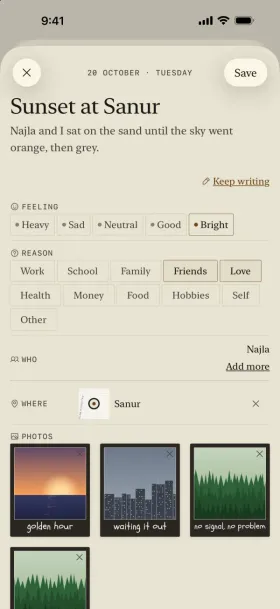
- Write a line or a whole page. Pick a word for how the day felt, from Heavy to Bright, and up to three reasons why.
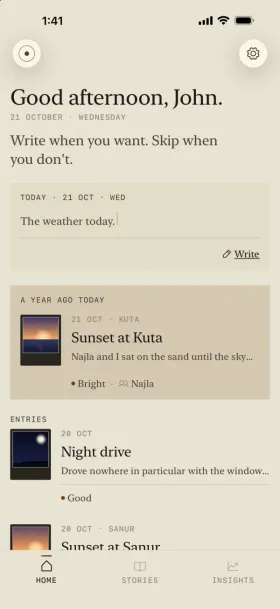
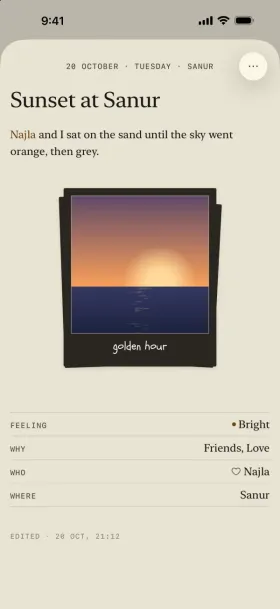
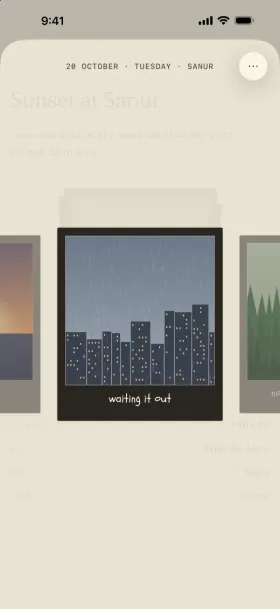
- Add the place, the people who were there and a few photos, which Oku keeps as captioned polaroids.
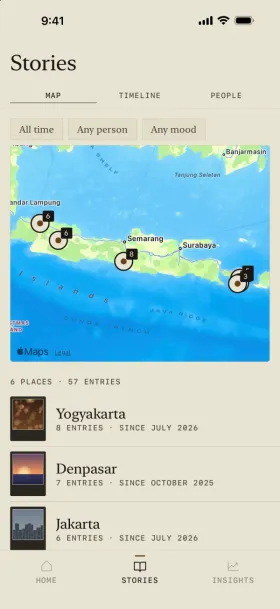
- Stories puts your entries on a map, on a timeline, and by the people in them.
- Home brings back an entry from this day in an earlier year.
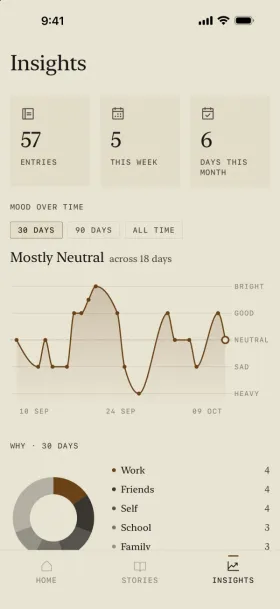
- Insights shows how your days have felt over time and when you tend to write, with no scores or advice.
- There’s no account and no tracking. Title ideas, photo captions and a light polish of your writing come from Apple’s on-device models, so your words stay on your phone.
- It works in English and Indonesian, and each one is written for its own language.
What I did
- Designed the app and its look. I kept it calm on purpose: it doesn’t coach you, cheer you on or count streaks.
- Built the iPhone app in SwiftUI. Each entry saves its place, people, photos, mood and reasons as data with SwiftData, and that’s what feeds the map, the timeline, the people view and Insights.
- Grouped places on the map by area, so a street joins its town. Jalan Kediri shows up under Kuta, and any part of Jakarta under Jakarta.
- Kept the AI on the phone with Apple’s Foundation Models, for title ideas, photo captions and a light polish you can undo. Voice notes turn into text on the device too. The App Store privacy label says Data Not Collected.
- Built the website in Astro with plain CSS. On the landing page, the compose sheet writes out three days, pins drop on the map, and the Insights charts work like the real ones. The privacy policy, terms and FAQ are pulled from the app’s own docs, so the two always match.
Oku 1.0 is done, and it’s coming to the App Store soon.