
 Apple Developer Academy
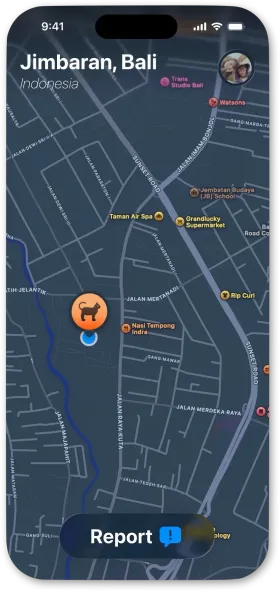
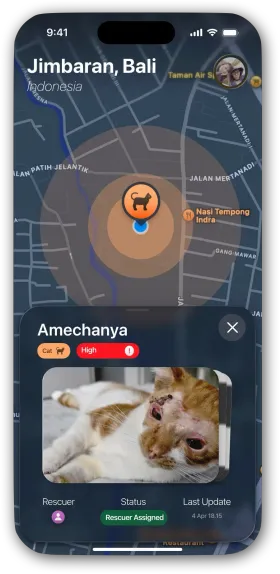
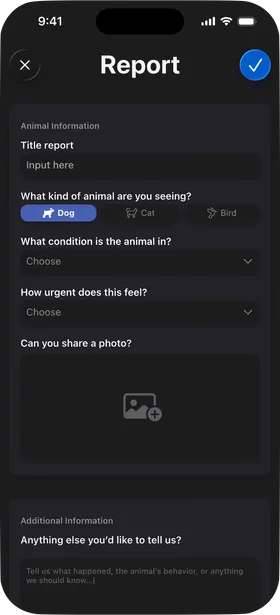
PAWS is an app for people in Bali who see a stray animal in trouble and want to get it help. We made it at Apple Developer Academy in Bali as a team of five, and all of us worked on both the research and the design.
How it started
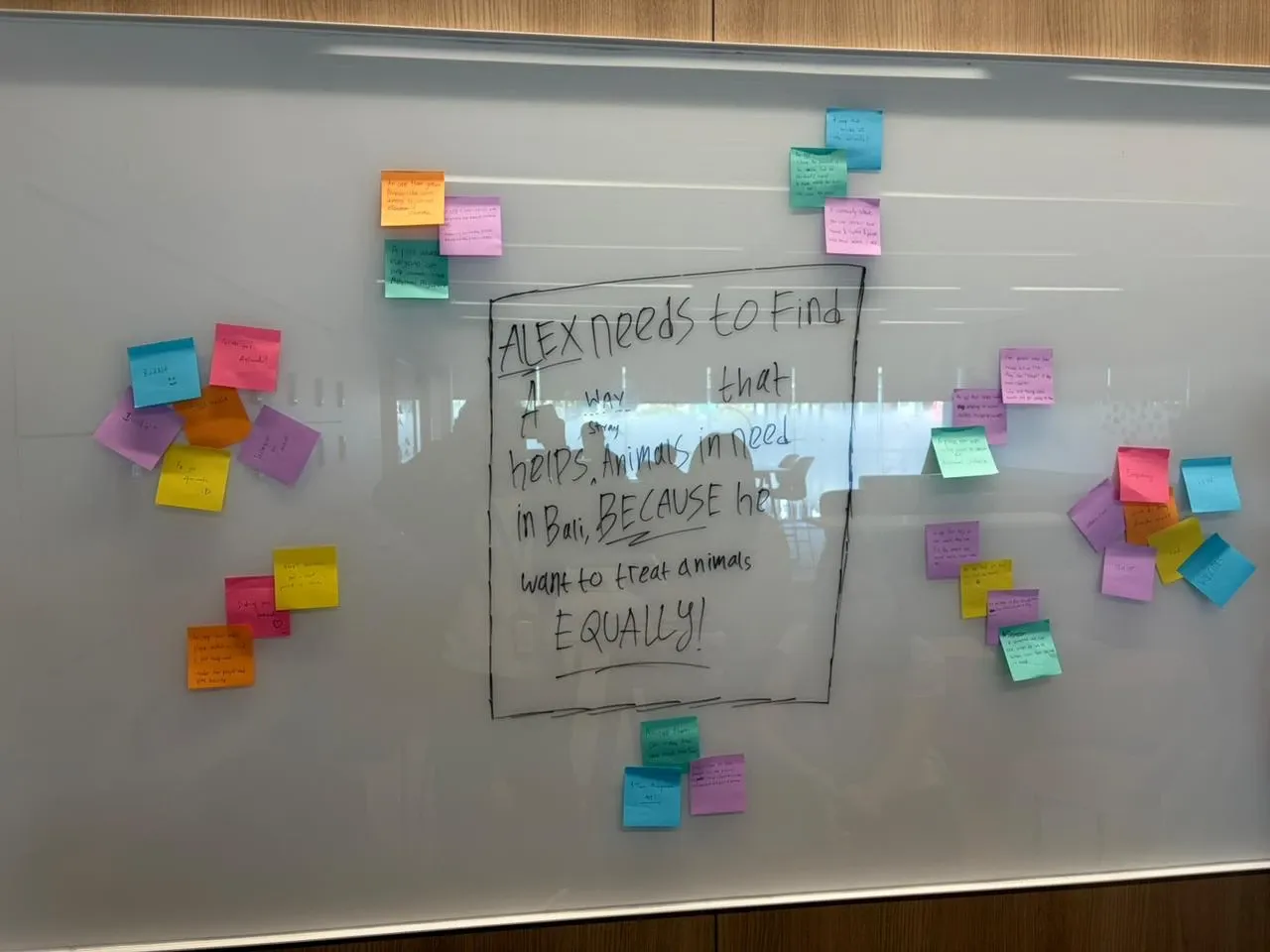 Our problem statement
It started with a friend of ours, Alex. He used to be vegetarian but stopped, and our first idea was to help him go back. So we interviewed him.
He said it was too expensive, took too much time, and meant learning new recipes all the time. The more we talked, though, the less it sounded like food was the real issue. Alex loves animals. He had helped a lot of them before, and the times he couldn’t help one stayed with him. He once watched a stray get kicked out of a restaurant just for looking for food, and it really upset him.
So we stopped trying to change what he eats and looked at what he already cares about. We put everything we learned on sticky notes in Miro and on the whiteboard, and ended up with one sentence: Alex needs a way to help stray animals in need in Bali, because he wants to treat animals equally.
How we got there
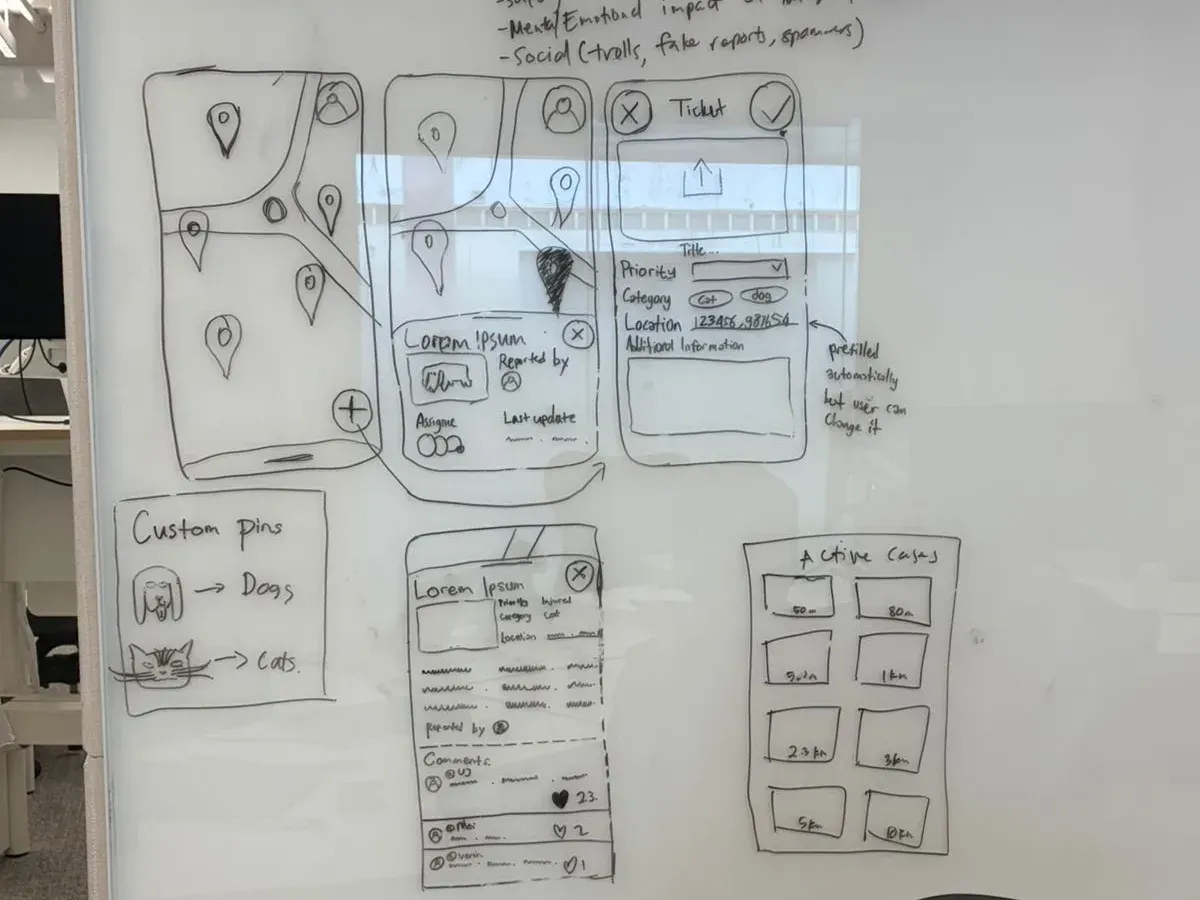 Early sketches
- We sketched the first screens together on the whiteboard: the map, the report form, the case details and a list of active cases nearby.
- We talked through what could go wrong, like keeping rescuers safe, how upsetting photos of hurt animals can be, and trolls or fake reports.
- Then we turned the sketches into the screens in Sketch.
What the app does
When you see an animal that needs help, PAWS helps you find other people or groups nearby who can step in.
- The map shows every reported animal around you, with a pin for each one.
- Tap Report to send a new one. You pick the animal, say what condition it’s in and how urgent it feels, and add a photo. Your location fills in by itself.
- Tap a pin to see the case: the photo, how urgent it is, who’s rescuing it, its status and when it was last updated.
The presentation
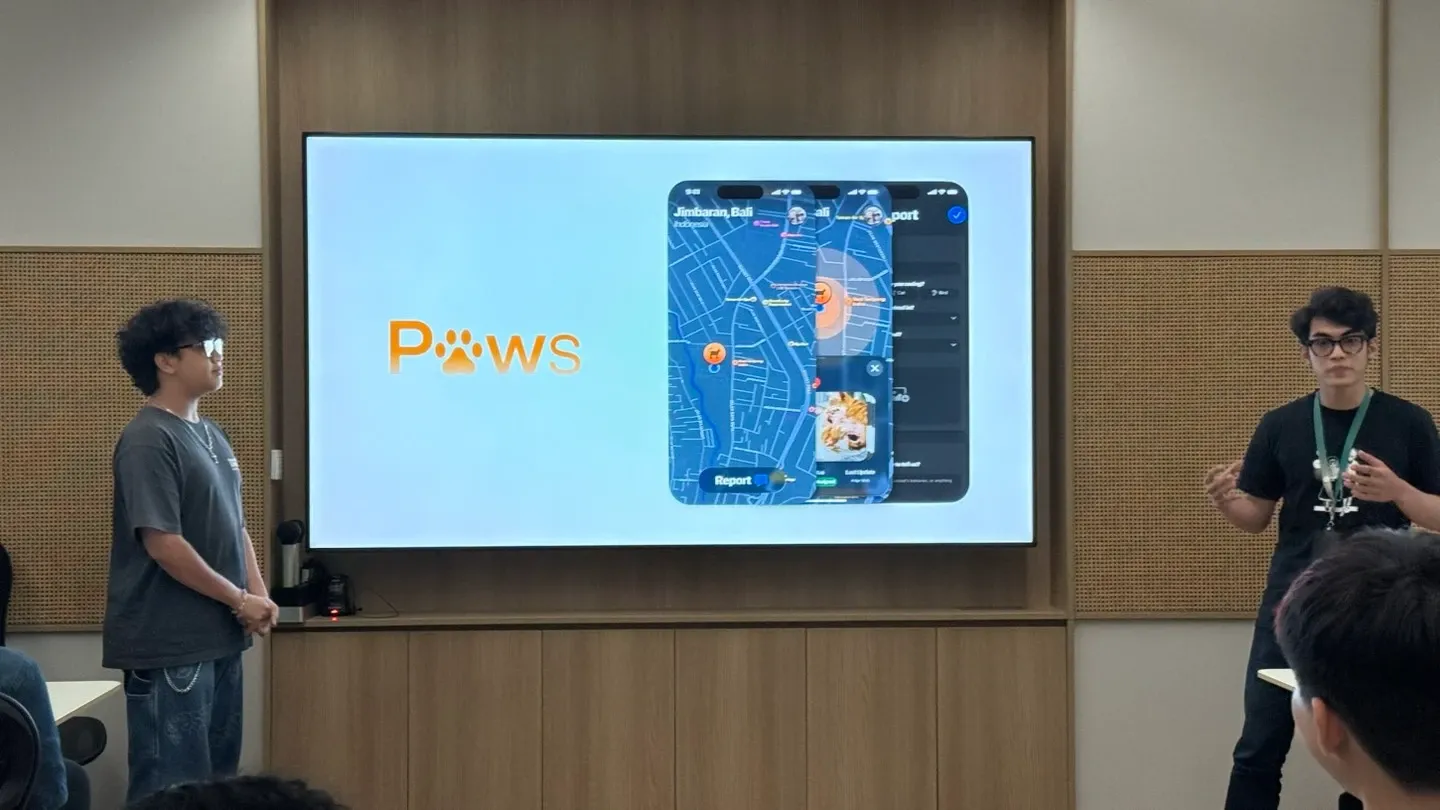
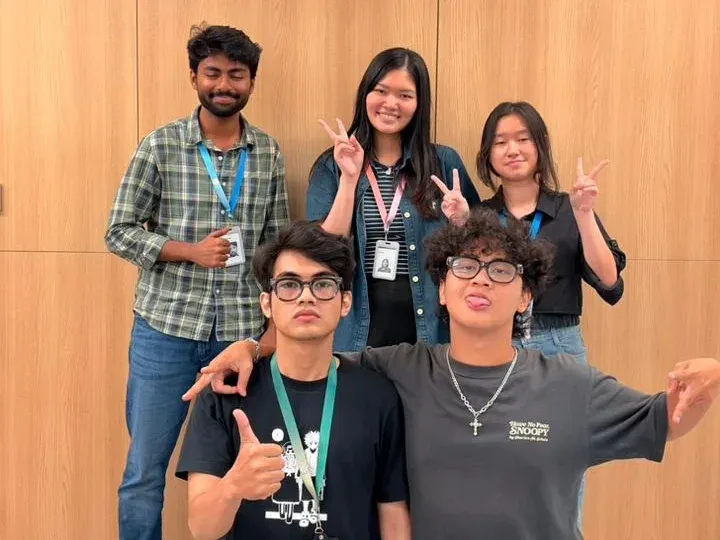 Presenting PAWS at the Academy, and the five of us
We ended by presenting PAWS at the Academy. The biggest lesson for me was to keep listening before picking a solution. If we had stopped after the first interview, we would have solved the wrong problem.