
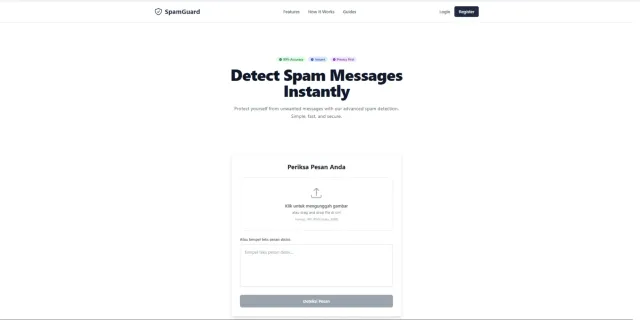
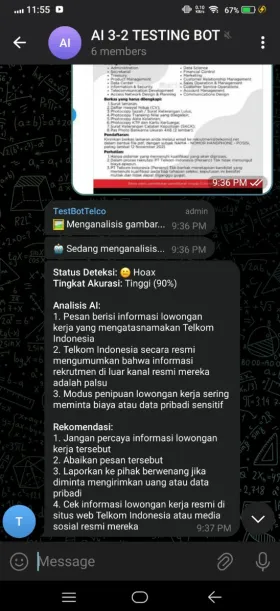
SpamGuard tells you if a message is a scam. You paste the text or upload a screenshot, on the website or to a Telegram bot, and it says whether it’s spam, a hoax or safe, why, and what to do next. We made it for UMKM, Indonesia’s small and micro businesses.
It was our final project in the AI stream of Digistar Class 2025, Telkom Indonesia’s internship program. There were six of us, and I was the project manager.
How it started
All we got was a topic: spam. So we started reading about who spam actually hurts, and small businesses kept coming up.
- Kaspersky and Interpol found that 40% of small businesses in Southeast Asia were targeted by phishing and online scams in 2024.
- Kominfo, Indonesia’s communications ministry, gets more than 11,000 hoax reports a year, and the number grows by about 22% every year.
- Indonesia has around 64 million UMKM. The number selling online went from 2 million in 2020 to 30 million in 2024.
That’s a lot of businesses that just went online, and fake links, scam texts and hoaxes reach them every day. So we built SpamGuard for them.
What it does
- It reads text, and screenshots of chats, flyers or documents.
- Every result says why the message looks like spam or a hoax, and what to do about it.
- On Telegram you just send the message to the bot. Once the answer comes back, your message disappears from the chat.
- Admins get a dashboard with how many messages came in and which scams show up most. When the AI gets one wrong, they can correct it, and those corrections are used to retrain the model.
What I did
- Planned the work and kept track of it, so we finished on time.
- Researched how scams hit UMKM. The numbers above came from that.
- Made the pitch deck. It walks through the problem, who gets hit, why it matters now, the product with a demo, and what we’d need to take it further.
- Pitched SpamGuard to the judges.
We won Best Pitching at Digistar Class 2025.
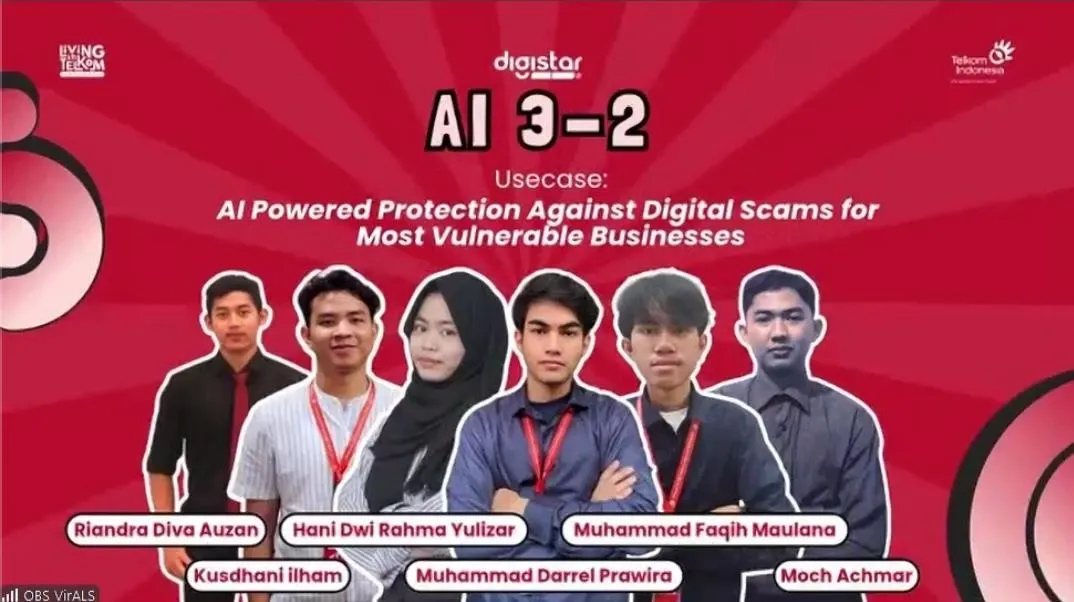 The Best Pitching announcement